ISO-8583
Native support for the card-switching standard, including custom bitmaps, private fields and acquirer-specific dialects used by legacy authorizers.
Score Bridge Connector
A solution to integrate payment and fintech systems with the market-leading fraud detection platforms.
Scodge sits between your authorizer and your fraud engine as a dedicated bridge: translating protocols, guaranteeing delivery, balancing traffic across detectors and always returning an answer — even when the detector cannot.
Your authorization host does not have to change. Scodge speaks the protocols your platform already uses and translates them, field by field, into what the fraud engine expects.

Native support for the card-switching standard, including custom bitmaps, private fields and acquirer-specific dialects used by legacy authorizers.
Modern HTTP endpoints for cloud-native issuers, wallets and BaaS platforms, with configurable headers, authentication and retry semantics.
Schema-driven parsing and generation for banking middleware and older service buses that still exchange structured XML payloads.
Lightweight, low-latency message exchange for microservices and event-driven architectures, with flexible mapping to scoring payloads.
Message layouts, field derivations, routing rules and business validations are configured per customer — no forked codebase, no vendor bottleneck.
The same integration serves real-time authorization traffic and scheduled bulk files, keeping one consistent set of rules across both.
Operational metrics — latency, throughput, error rates — sit alongside business indicators such as score distribution and decline reasons.
Fraud infrastructure will eventually be unreachable. SAF makes that a scheduling problem instead of a data-loss problem.

Transactions are persisted the moment the destination stops responding and are delivered automatically once service is restored.
Every stored message keeps its original content and sequence, so nothing is duplicated, reordered or silently dropped.
Advice traffic can be replayed transaction by transaction or consolidated into batches, depending on the window you want to use.
Control the recovery burst by amount, waiting interval and start time, so a backlog never overwhelms the fraud detection servers.
A short-term memory of scoring decisions that keeps authorizations flowing when the detector cannot answer.
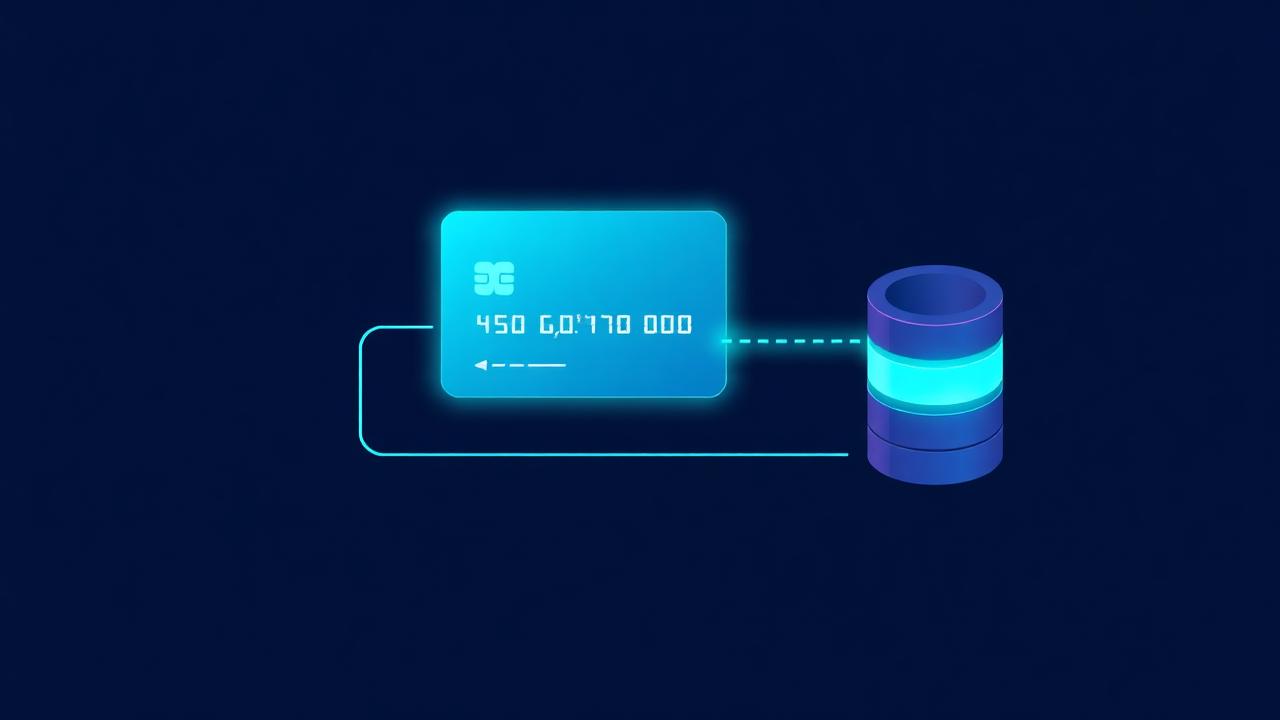
The most recent scoring response for each card is retained and indexed for immediate reuse in subsequent decisions.
If the fraud detection server is down, Scodge answers from the last known score instead of leaving the transaction without a decision.
The connector owns the conversation with your fraud engines — sessions, health, balancing and failure behaviour.

Transactions are dispatched asynchronously to one or many fraud detection servers, keeping the client channel free of blocking waits.
Echo, Handshake and Stop Transaction flows are managed automatically to keep sessions alive and gracefully suspended when required.
Traffic is distributed across the available detector instances, with unhealthy nodes removed from rotation and reintroduced on recovery.
Configurable timeouts produce a defined client response instead of a hanging authorization, protecting end-to-end service levels.
Not every scoring decision belongs in the authorization path. Scodge handles the offline half of the workload with the same rule set.

Registrations, updates and other non-financial events are scored in real time or grouped into scheduled runs.
Ingest, validate and process customer-supplied files, returning results in the layout your downstream systems already consume.
Technical and business monitoring ships with Scodge. Select any screen to enlarge it.
Tell us about your authorization flow, the fraud engines you use and the protocols involved. Our team will come back with an integration outline.
Multi-protocol integration, Store and Forward resilience, last-score fallback, controlled communication and batch processing — configured to your operation.